
The TCM view
Traditional Chinese Medicine often describes neuropathy in terms of Qi and Blood not adequately nourishing the extremities, sometimes with Dampness or stasis. Treatment addresses both local symptoms and overall constitution.
Conditions · Neuropathy
Does this sound familiar?
The TCM view
Traditional Chinese Medicine often describes neuropathy in terms of Qi and Blood not adequately nourishing the extremities, sometimes with Dampness or stasis. Treatment addresses both local symptoms and overall constitution.
The medical view
Neuropathy needs a medical diagnosis and management of its underlying cause. Acupuncture has been studied as a supportive therapy for neuropathy symptoms, including in cancer care, where integrative oncology guidelines discuss it for certain kinds of pain.
Your care at Seven Medicine
How long care usually takes
Nerve symptoms usually change slowly. Expect a series of visits with regular check-ins, rather than a quick fix.
01
Dr. Kristina's training includes oncology settings. She'll ask about your treatment schedule, blood counts and any restrictions from your oncology team.
02
Treatment focuses on the hands and feet, plus whole-body points for sleep, fatigue and stress.
03
We track numbness, pain and function so you can see trends over time.
Illustrative treatment journey
Treatment response varies. Your care plan is based on your symptoms, assessment and response over time. This is an illustration, not a medical image.
Research
Reviewed October 2026. Research describes groups of people, not guarantees for any individual. Explore the research →
A small pilot trial found acupuncture improved neuropathy symptoms compared with usual care, and a 2026 review of 40 trials found some symptom improvement — but with very low certainty. Standard treatment options are limited as well; ASCO identifies duloxetine as the only agent with adequate evidence for painful CIPN.
The 2022 Society for Integrative Oncology–ASCO guideline recommends acupuncture for aromatase-inhibitor-related joint pain and says it may be recommended for general cancer pain or musculoskeletal pain. Acupuncture is supportive care and does not treat cancer.
Patient experiences
Individual experiences vary. Testimonials reflect personal experiences, not typical or guaranteed results.
Meet your practitioner
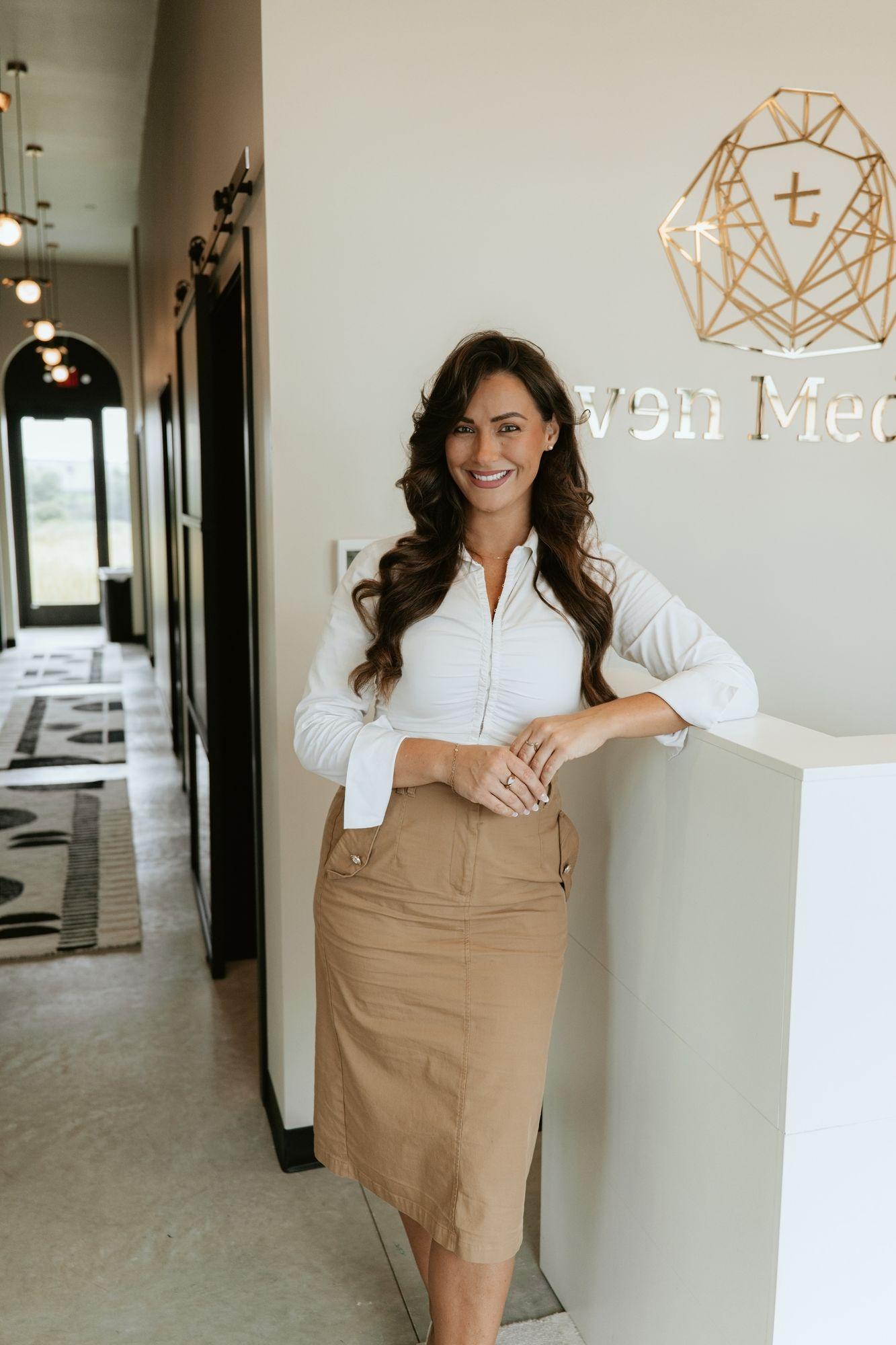
DAcCHM, M.CM, L.Ac., Dipl. Ac.
Dr. Kristina completed her Doctorate in Acupuncture and Traditional Chinese Herbal Medicine as valedictorian, summa cum laude, after earning master’s degrees in both acupuncture and Traditional Chinese Medicine. Her clinical training spans hospital and rehabilitation settings in Minnesota and clinical study in Zhengzhou, China.
She explains your care in both TCM and familiar medical terms, so you understand what she’s seeing, why she recommends what she does, and how you’ll know if it’s working.
Dr. Kristina holds a clinical doctorate in acupuncture and Chinese herbal medicine. She is a licensed acupuncturist, not a medical physician (MD/DO), and works alongside — not in place of — your medical team.
FAQ
Acupuncture is often used in integrative oncology programs, but timing matters — particularly around low blood counts. Dr. Kristina will ask about your treatment and may coordinate with your oncology team.
We can't promise that. Some research suggests acupuncture may help neuropathy symptoms for some people, but evidence is still developing. We'll be honest about what we see as we go.
Still have questions?
or call(507) 258-7771